Kyokushinkai
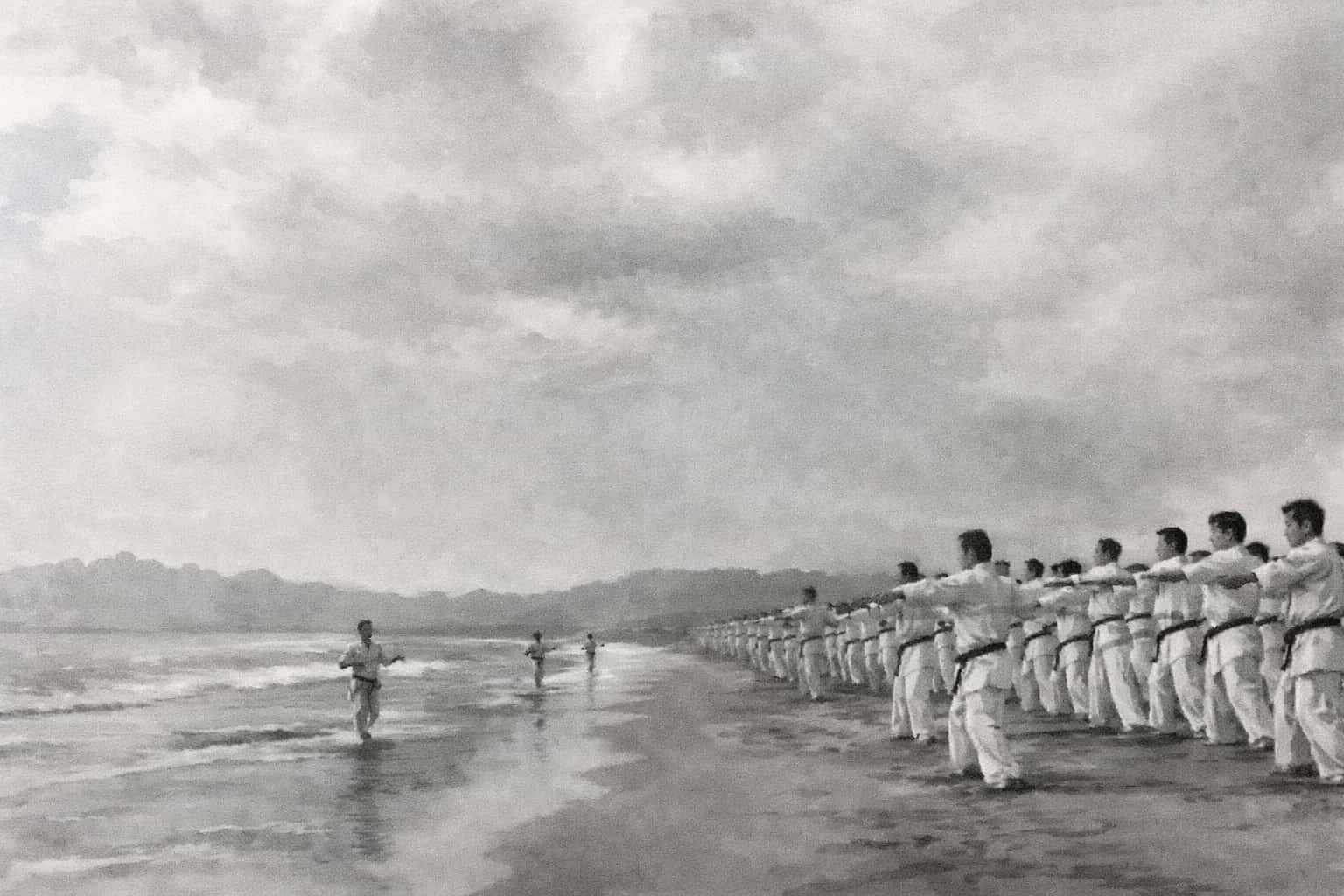
Kyokushin is a full-contact system within modern Japanese karate founded by Sosai Masutatsu Oyama (1923–1994). The system was organizationally formalized in 1964 with the establishment of the International Karate Organization Kyokushinkaikan.
The name Kyokushin (極真) means “ultimate truth.”
- Kyoku (極) – ultimate
- Shin (真) – truth
- Kai (会) – association
- Kan (館) – building or hall
While Kyokushin refers to the style and training system, Kyokushinkaikan refers to the organizational structure.
Character of the System
Kyokushin is characterized by:
- Full contact in kumite (sparring)
- Emphasis on physical realism and direct testing
- Structured discipline
- Integrated technical and mental training
The system is built upon four fundamental components:
- Kihon – basic technique and structural body mechanics
- Kata – formalized movement systems
- Kumite – practical application through sparring
- Tameshiwari – breaking as a functional test of technique
These elements are not isolated practices but mutually reinforcing methods for technical and personal development.
Historical Context
Kyokushin developed during a period when karate in Japan was undergoing institutionalization and competitive restructuring. In his writings, Oyama emphasized that karate must not be reduced to form or point-based activity, but must be tested through realistic training and physical consequence (Vital Karate, 1967; Advanced Karate, 1970).
The development of the system was influenced by:
- Okinawan and Japanese karate traditions
- Goju-ryu and Shotokan
- Zen Buddhist discipline and ascetic training
- The post-war need for physical and mental reconstruction
Kyokushin can therefore be understood as an attempt to unify traditional budo discipline with practical combat realism.
The Principle of Function
A central formulation within the system is the principle Ichi Geki, Hissatsu – “one strike, decisive effect.” This principle does not represent a literal doctrine of lethal force, but a technical norm: every movement should possess functional integrity.
In Mastering Karate, Oyama emphasizes that physical strength without mental discipline is insufficient, and that technique without realism lacks value. Training is therefore both physical and disciplinary.
Purpose and Direction
Kyokushin is not merely a competition format. It is a system aimed at:
- Physical robustness
- Mental stability
- Self-overcoming
- Disciplined conduct
The system can thus be understood both as a method of combat and as a path (dō). The practical dimension — that technique must function in application — remains primary over formal aesthetics.
Further Structure
The following sections explore the system’s various dimensions in greater depth:
- Historical background
- Sosai Masutatsu Oyama
- Fundamental principles
- Training methodology
- The knockdown system
- Organizations