System Structure
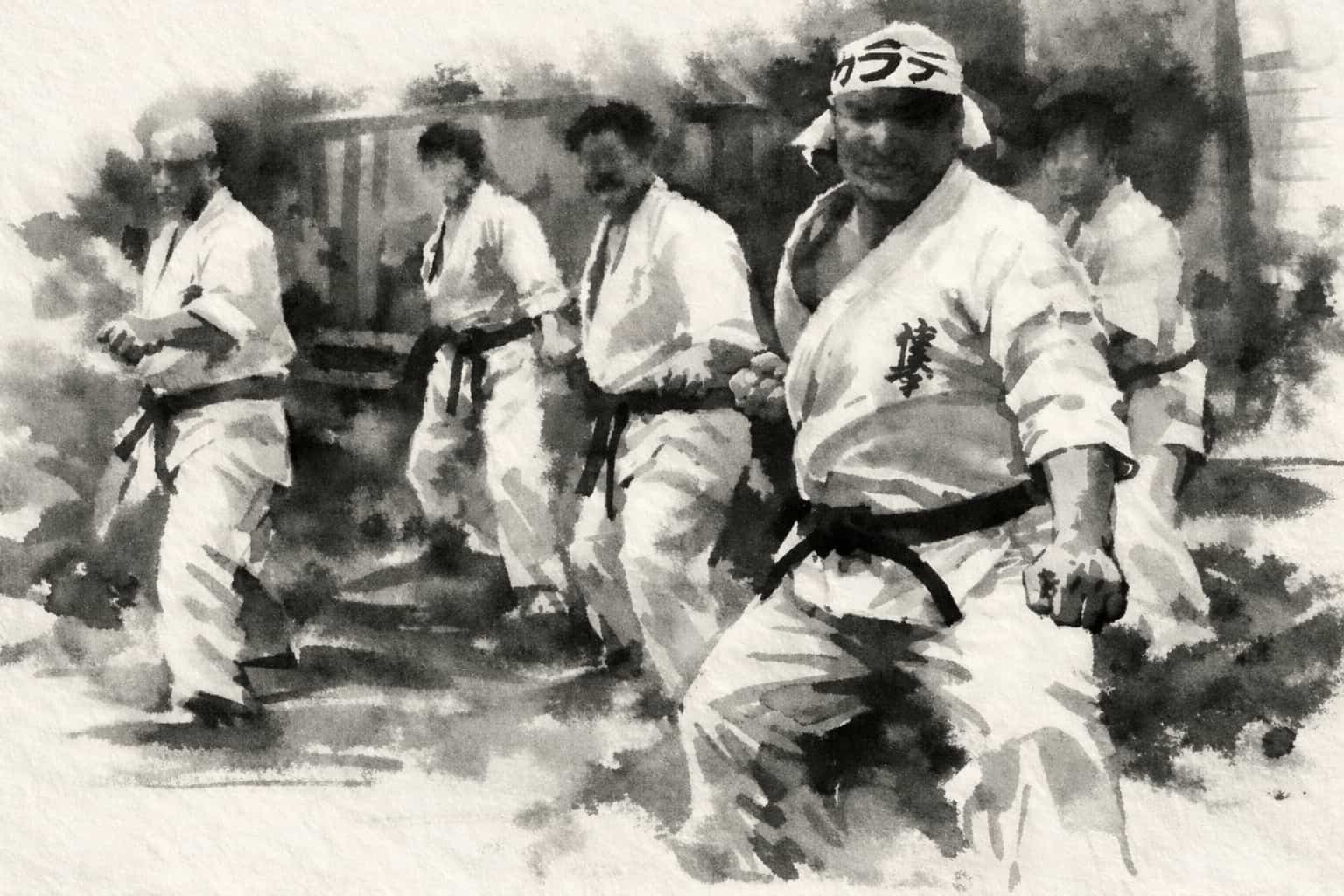
The system principles discussed in the previous chapter are realized through a clearly defined training structure. Kyokushin is organized around four primary components which together form a coherent system:
- Kihon
- Kata
- Kumite
- Tameshiwari
These components are not independent training elements, but interdependent parts of an integrated model.
1. Kihon – Foundational Structure
Kihon forms the foundation of the system. Here, practitioners develop:
- Basic stances
- Striking and kicking mechanics
- Blocking techniques
- Posture and balance
The purpose of kihon is to establish correct structure and movement mechanics. The structural body integration described in the previous chapter is primarily developed through this form of training.
Kihon thus functions as the technical base of the system.
2. Kata – Formalized Movement
Kata consists of predetermined movement patterns that systematize techniques into sequences.
Its function is to:
- Consolidate fundamental technique
- Structure movement transitions
- Train timing and rhythm
- Integrate breathing and movement
Kata serves as an intermediary between isolated basic technique and application under resistance.
3. Kumite – Application Under Resistance
Kumite is the component in which technique is tested through interaction with an opponent.
In Kyokushin, kumite is characterized by:
- Full contact to the body and legs
- Controlled but consistent physical load
- Gradual increase in intensity
Kumite operationalizes the principle of functional verification. Technical effectiveness is tested in a dynamic situation, distinguishing this component from kihon and kata.
4. Tameshiwari – Physical Verification
Tameshiwari involves breaking materials such as wood or tiles.
Its function is not spectacular demonstration, but:
- Testing correct power transfer
- Confirming structural body alignment
- Verifying technical precision
As emphasized in Vital Karate by Sosai Masutatsu Oyama (1923–1994), breaking is a concrete method for testing technical effectiveness (Oyama 1967).
Tameshiwari complements kumite by isolating power generation from dynamic interaction.
Interrelation of Components
The coherence of the system arises from the interaction between these four parts:
- Kihon establishes structure.
- Kata organizes structure into sequences.
- Kumite tests structure under resistance.
- Tameshiwari verifies power generation.
No single component is sufficient on its own. The functioning of the system depends on the integration of all parts.
Structural Summary
Kyokushin is constructed as a circular and integrated system in which:
- Basic technique is developed in isolation
- Movement is formalized
- Application is tested
- Power is verified
This structure ensures that technical norms, training methodology, and practical testing remain coherent.
The deeper conceptual dimensions are addressed in the Philosophy section, while practical implementation is covered in the Training section.