Grading System
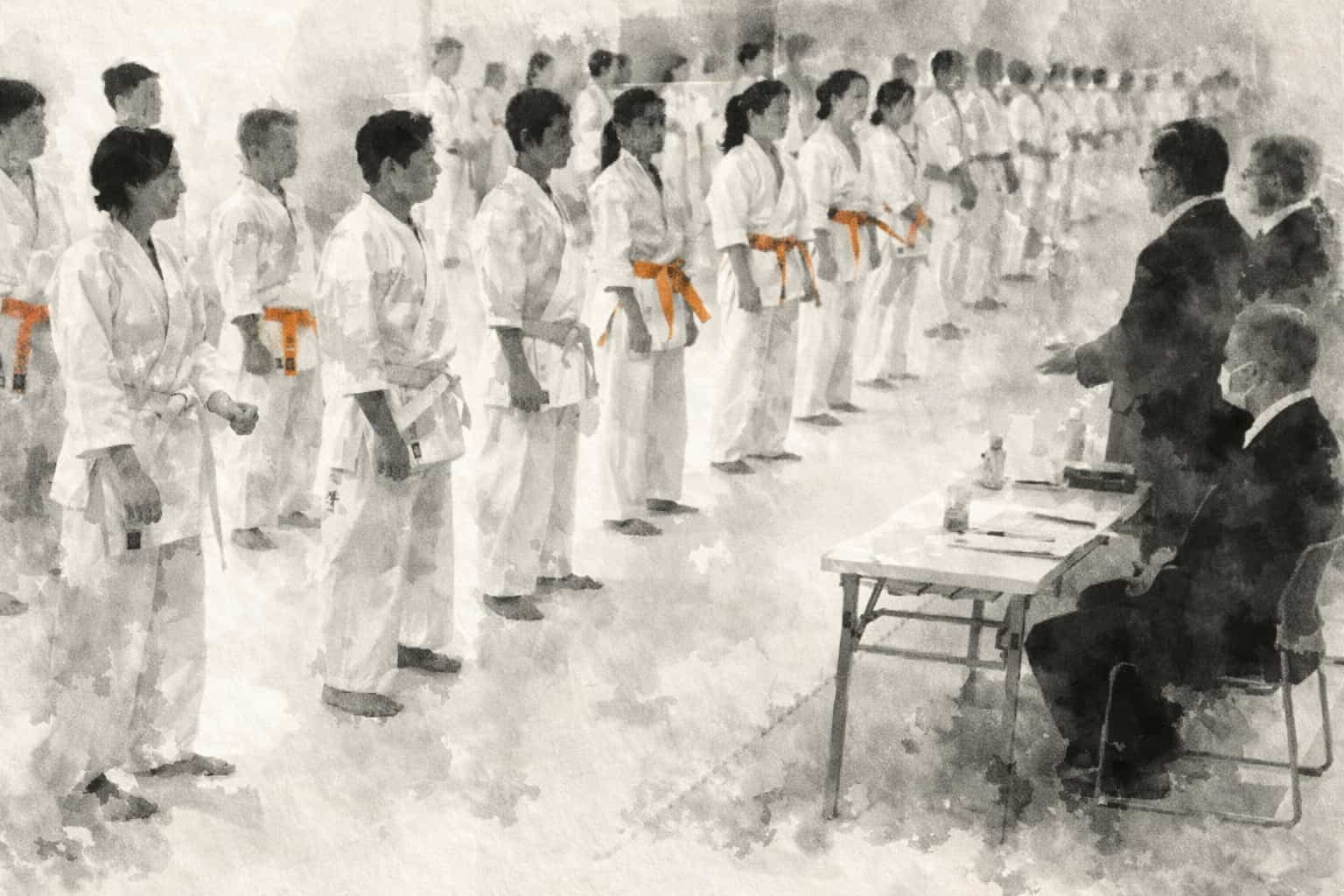
The grading system constitutes the formal structure through which individual progression in Kyokushin is recognized and administered. It is an institutional mechanism related to the system’s technical and methodological framework, but it should not be confused with the training method itself or its philosophical dimension.
Grading represents a formal evaluation of technical level, physical capacity, and methodological understanding within the organization to which the candidate belongs. The system functions both as pedagogical progression and as administrative standardization.
Kyu and Dan Structure
Kyokushin generally applies a system of ten kyu grades (10th kyu to 1st kyu) followed by dan grades (black belt ranks).
This model — ten student grades followed by the dan system — is the established structure within the International Karate Organization (IKO) and most major Kyokushin organizations internationally.
There is no universal eleven-kyu system within Kyokushin. Local variations may occur, for example through the use of mukyu (no rank) before 10th kyu or through intermediate children’s levels, but the core structure consists of ten kyu grades.
Kyu Grades
Kyu grades represent progressive technical and physical development. They mark progression in:
- Fundamental technique (kihon)
- Movement control and structure
- Ability to apply technique under load
- Endurance and training discipline
Belt color coding varies between organizations, but progression follows a descending numerical order from 10th kyu to 1st kyu.
Dan Grades
Dan grades indicate higher levels of technical competence and experience. They often involve:
- Advanced technical understanding
- Pedagogical responsibility
- Institutional recognition
Within IKO and several other organizations, dan grades require formal approval through a central or national authority.
Relation to System Principles
The grading system is not independent of the system’s internal logic. Rather, it represents an administrative structuring of the progression already embedded in the training system.
The following correlations can be identified:
- Progressive load → increasing demands on physical endurance and kumite.
- Functional verification → requirement that techniques function under resistance.
- Structural body integration → assessment of posture, balance, and power transfer.
Grading thus formalizes the system’s internal developmental logic within an institutional framework.
Evaluation Components
Kyokushin gradings typically include several components reflecting the system’s training structure:
1. Kihon
Assessment of technical precision, structure, and movement efficiency.
2. Kata
Assessment of formal movement sequences, rhythm, control, and technical understanding.
3. Kumite
Testing of application under resistance. The number of kumite bouts usually increases at higher grades, particularly for dan examinations.
4. Physical Endurance
Elements that test the candidate’s ability to maintain technical structure under physical load.
Exact requirements vary between organizations and are determined administratively.
Institutional Function
The grading system serves several functions within the organization:
-
Standardization of Technical Level
Establishes a common reference framework for progression. -
Quality Assurance of Instructor Competence
Higher dan grades are often linked to the right to examine and teach. -
Structuring of Responsibility
Dan grades may entail organizational roles such as dojo leader, regional representative, or technical examiner.
The grading system therefore operates both pedagogically and administratively.
Time Requirements and Progression
Within major international organizations, there are often:
- Minimum time intervals between grades
- Requirements for active training over a defined period
- Recommendation from higher ranks
- Formal registration with the central organization
The purpose is to ensure that progression reflects not only technical skill but also accumulated experience.
Variation Between Organizations
Following institutional differentiation after 1994, grading procedures have developed differently across organizations.
Differences may concern:
- Number of kumite bouts required for dan grades
- Time requirements between grades
- Administrative approval processes
- National versus central issuing authorities
These variations affect the institutional level but do not alter the fundamental structure of ten kyu grades followed by the dan system.
Delimitation
The grading system is an administrative and pedagogical structure. It should not be confused with:
- Individual moral development
- Philosophical concepts such as shugyō
- Personal character evaluation beyond technical criteria
Philosophical dimensions are addressed in the Philosophy section and do not constitute formal grading criteria in a strictly organizational sense.
Summary
Kyokushin’s grading system is generally based on ten kyu grades followed by dan grades. The system formalizes progression through technical examination, physical load, and administrative approval processes.
Variations exist between organizations, but the fundamental structure is shared within the Kyokushin tradition and reflects the system’s overarching training principles.