Symbols and Insignia
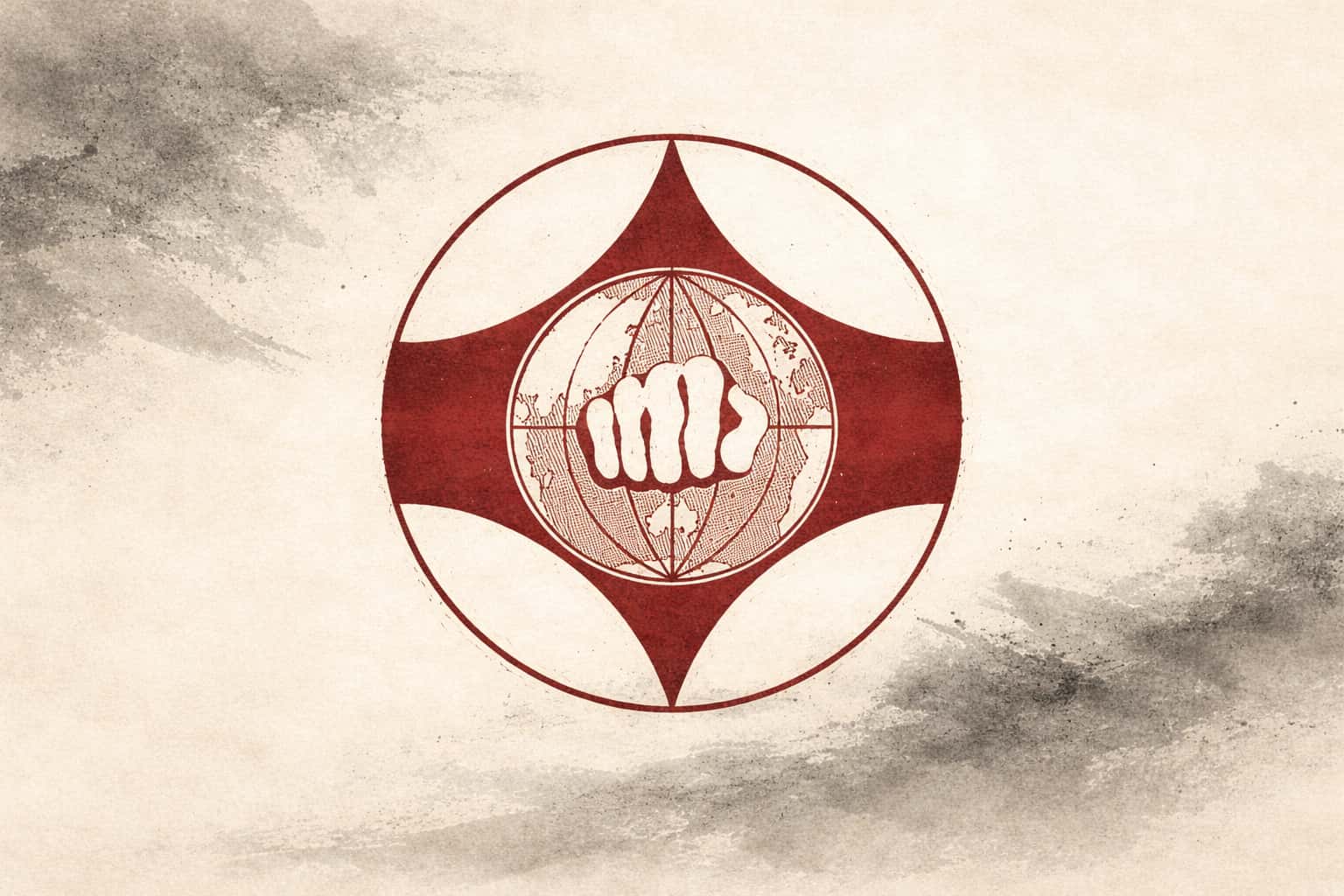
Kyokushinkai uses visual and linguistic insignia as expressions of the style’s identity and organizational continuity.
The two central ones are:
- Kanku (the emblem)
- The kanji for Kyokushinkai (極真会)
These symbols were established in connection with the formalization of the International Karate Organization (IKO) Kyokushinkaikan in 1964 and have since functioned as identity markers within the system.
Their function is organizational and historical. They do not constitute independent philosophical doctrines.
Kanji – 極真会
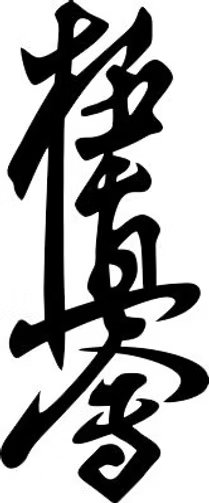
The name Kyokushinkai is written with three Japanese characters:
極真会
The meaning of the characters is linguistically direct:
- 極 (Kyoku) – ultimate, extreme
- 真 (Shin) – truth
- 会 (Kai) – association or organization
Together they form the name Kyokushinkai – “the association of the ultimate truth.”
In the writings of Sosai Masutatsu Oyama (1923–1994), the linguistic meaning of the name is explained, but no developed symbolic or esoteric interpretation of the graphic form of the characters is presented. Their function is primarily identity-related and organizational.
The kanji is traditionally used:
- As embroidery on the left chest of the gi
- On book covers and publications
- In official documents
- In organizational materials
Its use is consistently linked to the name of the style and its institutional representation.
Kanku
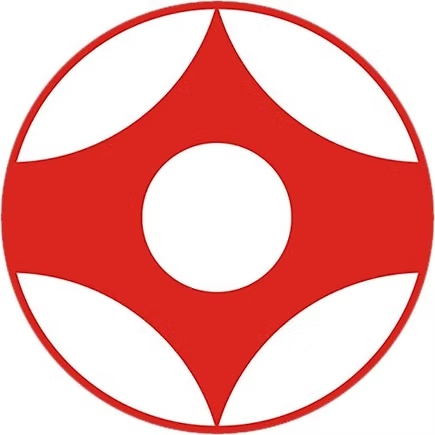
Kanku is the official emblem of Kyokushin.
The name is connected to the kata Kanku-dai. The word means “to look at the sky.” In this kata, the hands are raised and the fingers meet to form an opening through which the sky is viewed.
The emblem is used:
- On the training uniform (gi)
- On flags and banners
- In official documents
- As a symbol of Kyokushin’s international activity
Organizational Explanation of the Emblem’s Form
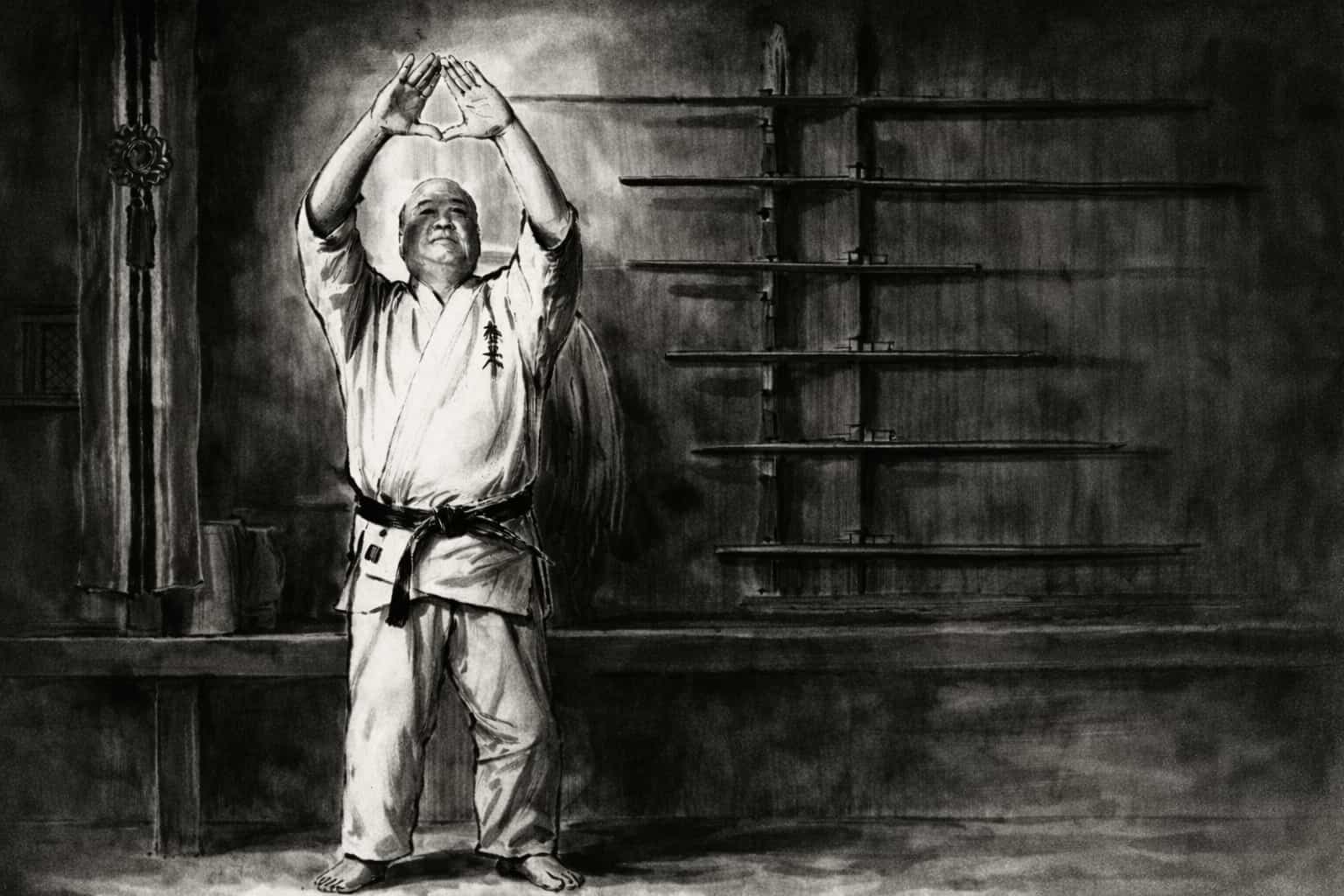
Within organizational materials, a pedagogical explanation of the emblem appears:
- The upper and lower points represent the fingers and thumbs in the Kanku kata.
- The broader side sections represent the wrists and strength.
- The central circle symbolizes the opening between the hands.
- The outer circle symbolizes continuity and circular movement.
This interpretation appears in organizational contexts and functions as a visual pedagogical explanation. It does not constitute a systematic symbolic theory in Oyama’s own writings.
Historical Use
Under Oyama’s leadership, both Kanku and the kanji were used as unified symbols within IKO Kyokushinkaikan.
After 1994, several independent organizations have continued to use:
- Kanku
- The kanji (極真会)
- The name Kyokushin
In some cases, minor graphic variations occur, but the fundamental symbolism has been retained.
The continued use of these symbols reflects organizational continuity rather than technical differentiation.
Legal Aspects
According to information from rights holders, certain names and symbols related to Oyama and Kyokushin are registered trademarks in some jurisdictions.
This may include:
- The name Masutatsu Oyama
- The name Kyokushin
- The Kanku emblem
Trademark law is a legal matter and may vary between countries and organizations.
The historical use of the symbols within Kyokushin is a separate issue from their registered trademark status.
Function Within the System
The symbols serve three primary functions:
- Identity marking
- Organizational continuity
- Visual representation of the style’s name and history
They are not technical components of the training system and do not in themselves form part of the system principles. Their significance is institutional and historical.
Summary
Kanku and the kanji are central insignia within Kyokushinkai.
The kanji (極真会) expresses the name of the style and its linguistic meaning: “the association of the ultimate truth.”
Kanku is the organization’s emblem and takes its name from the Kanku kata. Organizational materials include a pedagogical interpretation of the emblem’s form, but in Sosai Oyama’s own writings the emphasis lies primarily on training practice and discipline rather than symbolic theory.
Kanku and the kanji therefore function primarily as identity and organizational markers that support — but do not replace — Kyokushin’s practical budo tradition.