道場礼節
Dojo Etiquette
礼節 (Reisetsu)
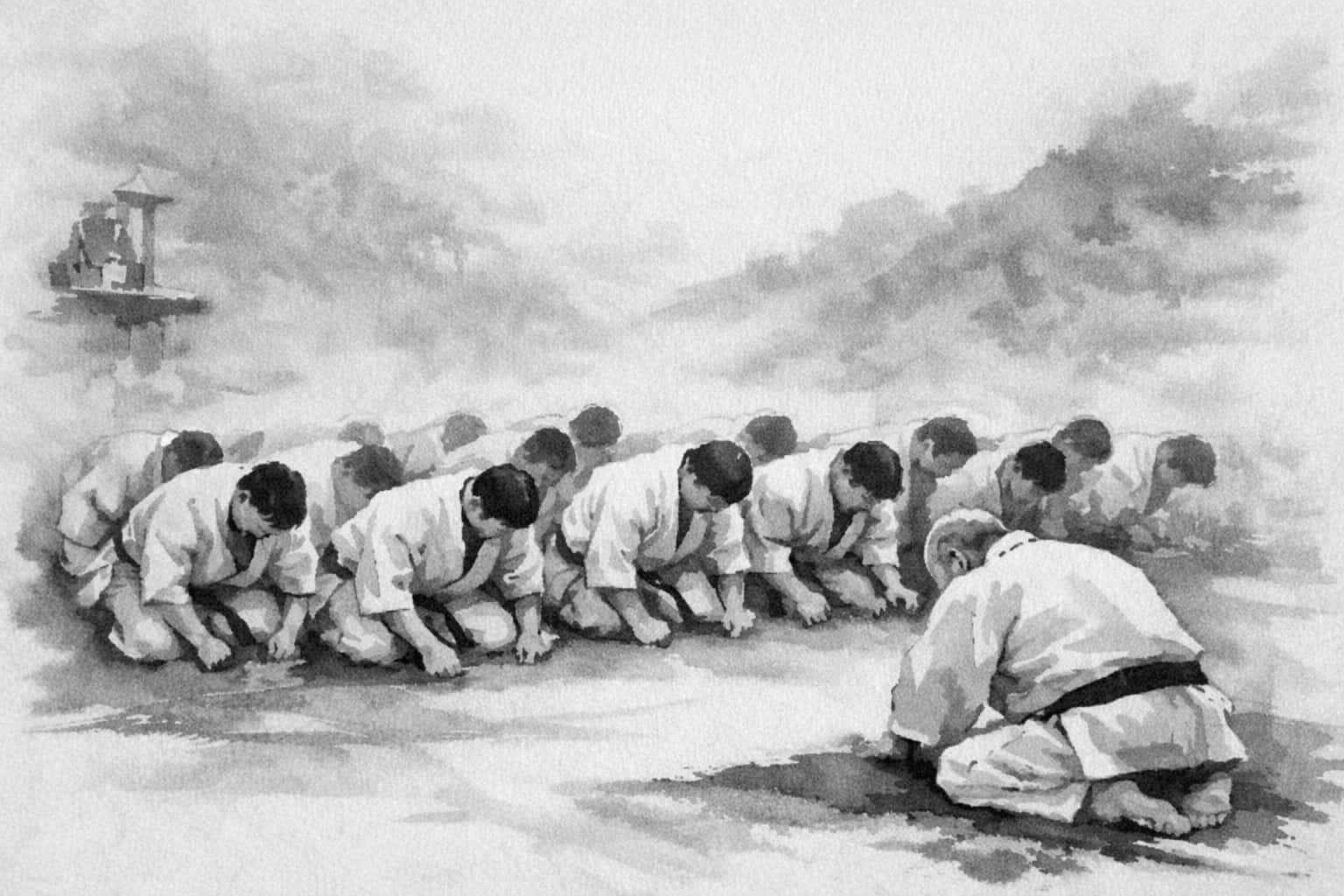
Introduction
Dojo etiquette in Kyokushin is not a separate rulebook, but a practical expression of the principles formulated in the Dojo Kun.
It rests particularly on the phrase:
礼節を重んじ (reisetsu o omonji)
“We shall value courtesy and respect.”
Etiquette is therefore a concrete application of respect, self-control, and discipline in daily training.
Reisetsu – The Principle of Respect
礼節 (reisetsu) means:
- Courtesy
- Politeness
- Proper conduct
Within budō, the concept does not refer to empty formalism, but to showing respect through action.
The Dojo Kun emphasizes:
- Respect for seniors
- Restraint from rude or reckless behavior
- Humility
This implies that training is not an arena for ego or domination, but for development.
Bowing, correct behavior, and restraint are therefore not ceremonies in themselves, but expressions of respect.
Self-Control in Action
The formulation in the Dojo Kun:
克己の精神を涵養すること
(to cultivate the spirit of self-overcoming)
means that the practitioner must control impulses, temperament, and aggression.
In practice, this implies:
- Not acting recklessly
- Training with discipline
- Taking responsibility for one’s power
Dojo etiquette functions here as an external support for inner self-control.
Discipline and Seriousness
Sosai Masutatsu Oyama (1923–1994) described training as a process of serious and continuous effort.
The concept of 修行 (shugyō) — lifelong disciplined training — implies that the dojo is a place for concentration and development.
The function of etiquette is therefore to:
- Protect the training environment from carelessness
- Maintain focus
- Mark training as a serious undertaking
Etiquette is a concretization of discipline through action rather than declaration.
Hierarchy and Responsibility
The Dojo Kun refers to respect for 長上 (chōjō) — seniors.
Hierarchy in the dojo is not personal power, but a pedagogical structure:
- Seniors have the responsibility to lead by example
- Juniors show respect through attention and effort
Respect is mutual and connected to function, not prestige.
Delimitation
Dojo etiquette is not:
- Ritualism without substance
- Militarism
- Blind obedience
Its value depends on its connection to discipline and character development.
When separated from the content of training, it loses its function.
Summary
Dojo etiquette in Kyokushin is a practical consequence of:
- 礼節 (respect)
- 克己 (self-overcoming)
- 修行 (disciplined training)
It is not an end in itself, but a support for the process through which body and character are shaped.
Etiquette expresses how discipline is translated into concrete action.