
Shiko-dachi
Name: Shiko-dachi (四股立ち)
English: Sumo stance
Introduction
Shiko-dachi is a wide, low, symmetrical stance with the feet turned outward, the knees opening in the same direction, and the body lowered between the legs.
Oyama describes it as sumo stance. In Kyokushin it develops a low center, lateral stability, hip control, and the ability to keep the upper body upright over a broad base.
Definition
- broad lateral base, approximately two shoulder widths as a teaching reference
- feet angled outward
- knees bent and opened in line with the toes
- hips lowered
- spine upright
- even right/left loading
- low centered gravity
Technical figure
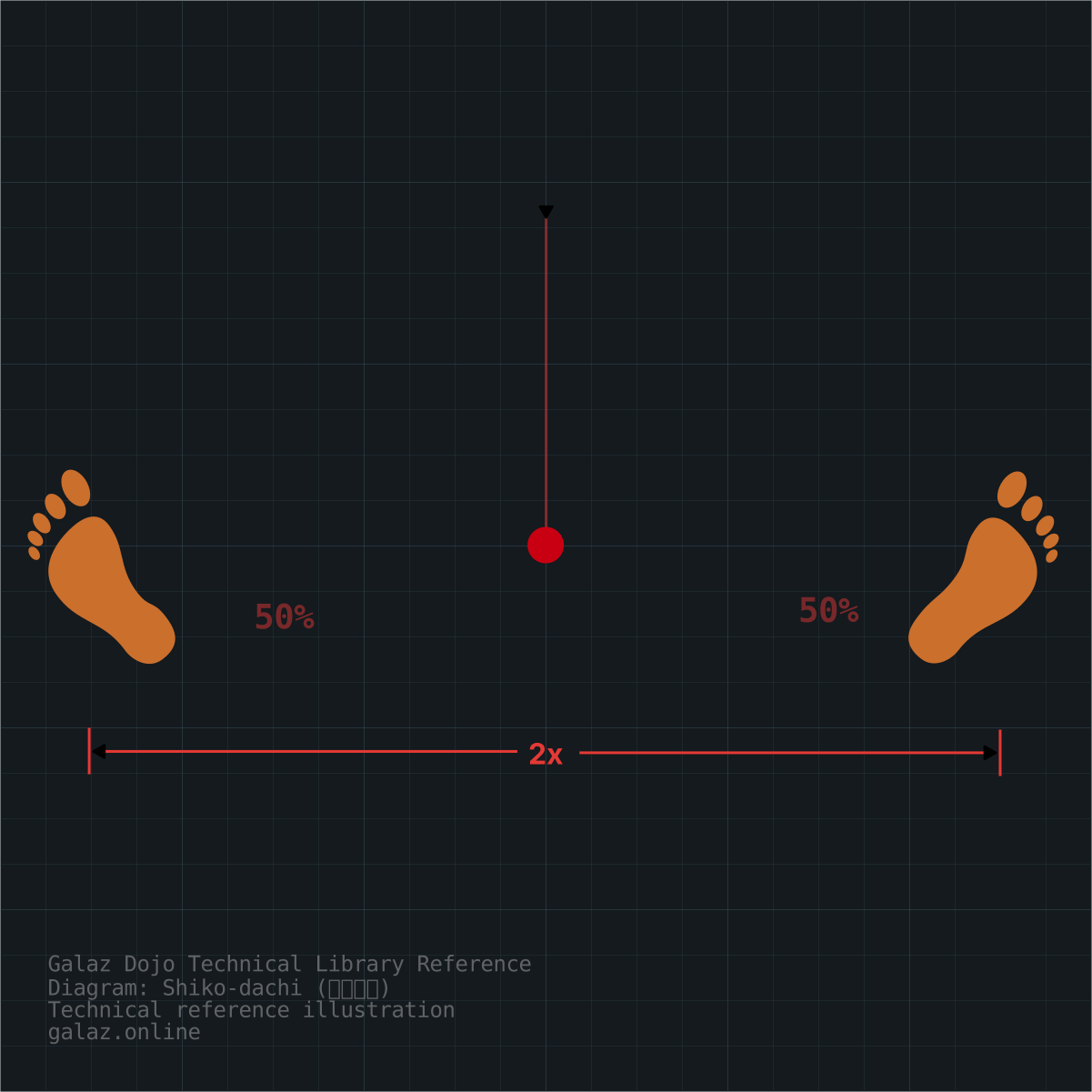
The 2× marker reflects an approximate proportional width and 50/50 expresses even weight. These are teaching references, not absolute measurements for every body.
Structure and form
Feet
Place the feet wide and angle them outward. Keep stable contact through the soles without collapsing to one edge.
Legs
Bend the knees and open them in the same direction as the toes. The legs support the body symmetrically and actively.
Hips
Lower the hips between the legs while keeping the pelvis collected and neutral. Do not simply sink passively.
Trunk and spine
Keep the spine straight and the trunk vertical even though the stance is low.
Shoulders, arms, and hands
Arm position follows the technique. The quality of the stance must remain independent of the arm position.
Gaze
Keep the head upright and look in the direction of work.
Weight distribution
Use 50% / 50% as a pedagogical description of symmetrical loading.
Center of gravity and balance
Keep the center low and between the feet. The stance should feel strongly grounded but still active and capable of carrying the next technique.
Technical purpose
Shiko-dachi develops:
- leg strength
- hip control
- knee-to-foot alignment
- a lowered center of gravity
- lateral stability
- upright posture under load
- ability to carry technique from a low base
Use
Basic training
Develop stability, leg strength, and body control while making knee, foot, hip, and trunk alignment easy to observe.
Kihon / Idō geiko
Use it when a technique requires a broad stable base and clear anchoring from a low position. It is not designed for rapid free movement.
Kata
It gives kata weight, stability, and clear direction when the whole structure remains coordinated.
Kumite / application
It is not a primary mobile kumite stance, but its principles can appear in brief moments of lowering, anchoring, or force transfer.
Technical key points
- broad base
- toes outward
- knees following the toe line
- hips lowered between the legs
- even weight
- straight vertical spine
- active legs and hips
- relaxed shoulders and neck
Common errors
- base too narrow or excessively wide
- foot angle too small or too large
- knees collapsing inward
- passive sinking of the hips
- forward trunk lean
- pelvis pushed too far back
- rounded spine
- uneven weight
- making depth more important than structure
Comment
Shiko-dachi is one of Kyokushin’s clearest models of low, broad, symmetrical body support. Correct execution combines leg strength, hip control, upright posture, and stable balance.