
Nekoashi-dachi
Name: Nekoashi-dachi (猫足立ち)
English: Cat stance
Introduction
Nekoashi-dachi is a compact rear-weighted stance in which most body weight is carried by the rear leg while the front foot remains light with the heel raised.
It trains the ability to carry the body backward without losing readiness forward. The front leg remains available for stepping, distance adjustment, blocking movement, or kicking.
Definition
- the rear leg carries most of the body weight
- the front foot is placed ahead with the heel raised
- only the ball/toe area of the front foot has light floor contact
- the trunk stays upright rather than leaning backward
- the stance remains compact and ready to change
Its function is to combine rear stability with a free, usable front leg.
Technical figure
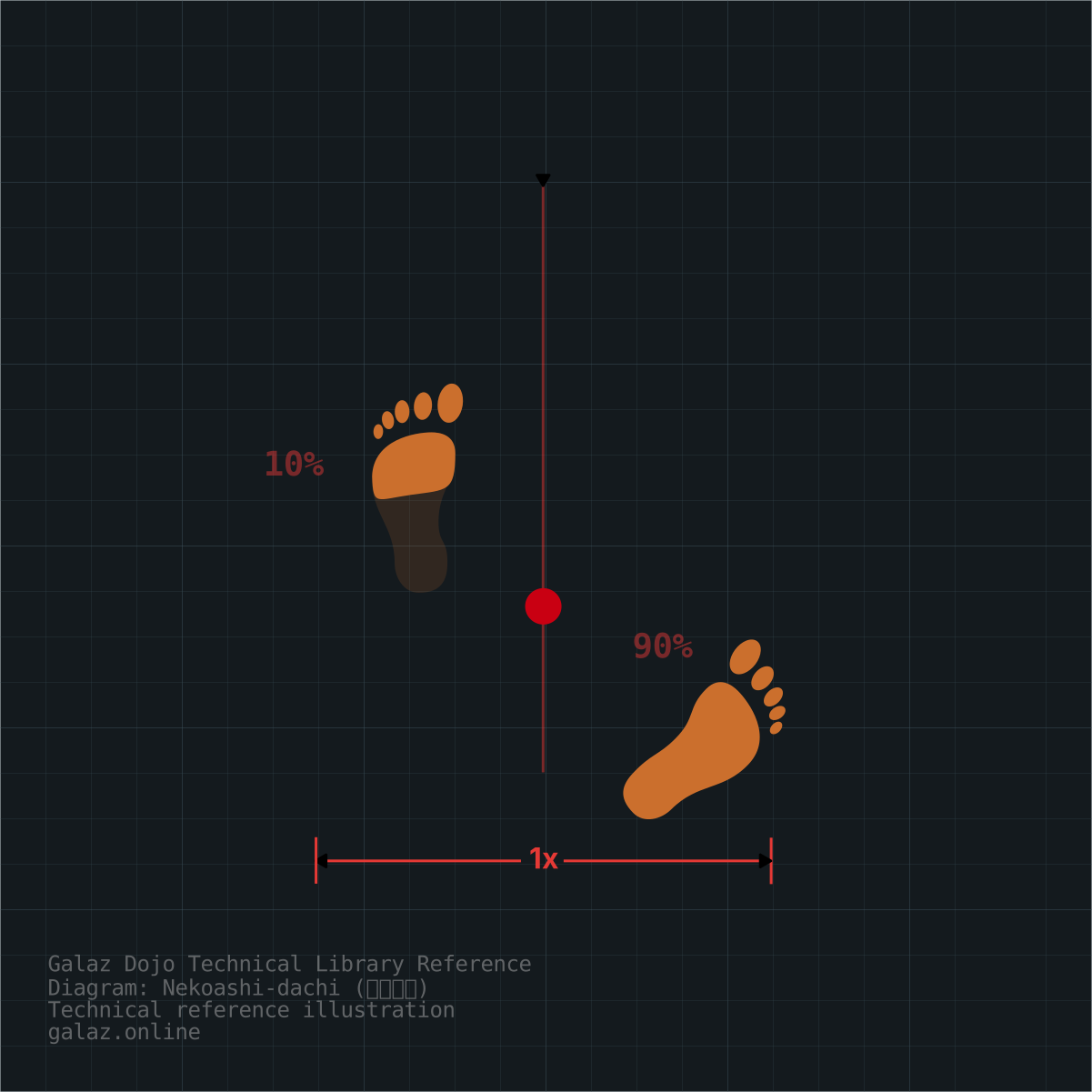
Measurements and percentages are pedagogical markers that express the stance principle rather than absolute values for every practitioner.
Structure and form
Feet
Place one foot in front of the other. Keep the front foot light, with the heel raised and only the front part of the foot touching the floor. The rear foot carries the primary load.
Legs
The rear leg actively supports the body. The front leg is unloaded but not passive; it remains alive and ready to lift, move, or kick.
Hips
Keep the hips collected over the base. Rear weighting is created through the legs and center, not by pushing the hips backward.
Trunk and spine
Keep the trunk upright. Do not create rear weighting by leaning the upper body backward.
Shoulders, arms, and hands
Keep the shoulders relaxed. Arm and hand position follows the technique being performed.
Gaze
Keep the head upright and the gaze in the technical direction.
Weight distribution
For teaching purposes the stance is approximately 10–20% front / 80–90% rear. In stricter form it may approach 10/90. The principle is more important than a fixed number: the front foot must remain light and technically active.
Center of gravity and balance
Keep the center low and rearward without becoming heavy or passive. Correct balance provides rear stability, a free front leg, quick access to kicking or stepping, and control through a compact base.
Technical purpose
Nekoashi-dachi develops:
- rear-leg support
- a free front leg
- balance in a compact asymmetrical structure
- readiness for kicks, steps, and directional change
- coordination of hips, trunk, and legs
- stability in receiving and blocking movements
Use
Basic training
Train rear weighting, balance, and control of the unloaded front leg while keeping the trunk vertical.
Kihon / Idō geiko
Use it when technique requires a light front foot, controlled rear weighting, and rapid transition.
Kata
It provides a compact base for blocks, receiving movements, shutō techniques, and transitions. It should feel loaded and ready rather than like a static pause.
Kumite / application
Its principles can support distance adjustment, defensive reception, and freeing the front leg for a kick. Oyama’s later practical material also uses nekoashi-tachi as a base for preparatory fighting positions.
Technical key points
- most weight on the rear leg
- front heel raised and front foot light
- front leg unloaded but active
- compact controlled base
- hips collected
- upright trunk
- rear leg active without locking
- immediate movement readiness
Common errors
- too much weight on the front leg
- allowing the front foot to become heavy
- dropping the front heel
- leaning the trunk backward
- over-bending or locking the rear leg
- losing hip center
- making the stance too long or too narrow
- letting the front leg become passive
Comment
Nekoashi-dachi is a central rear-weighted stance in Kyokushin. Correctly performed it is compact, alert, stable, and immediately mobile.