
Heikō-dachi
Name: Heikō-dachi (平行立ち)
English: Parallel stance
Introduction
Heikō-dachi is a neutral basic stance in which the feet are placed approximately shoulder-width apart, parallel, and pointing straight forward.
In Masutatsu Oyama’s stance system it corresponds to the parallel open stance or parallel foot stance. The body is carried upright, evenly, and centrally over both legs.
Definition
In Heikō-dachi:
- the feet are approximately shoulder-width apart
- both feet remain parallel
- the toes point straight ahead
- the body stays upright
- weight is carried evenly over both legs
- hips, trunk, and head remain centered over the base
There is no intended forward, rearward, or lateral bias.
Technical figure
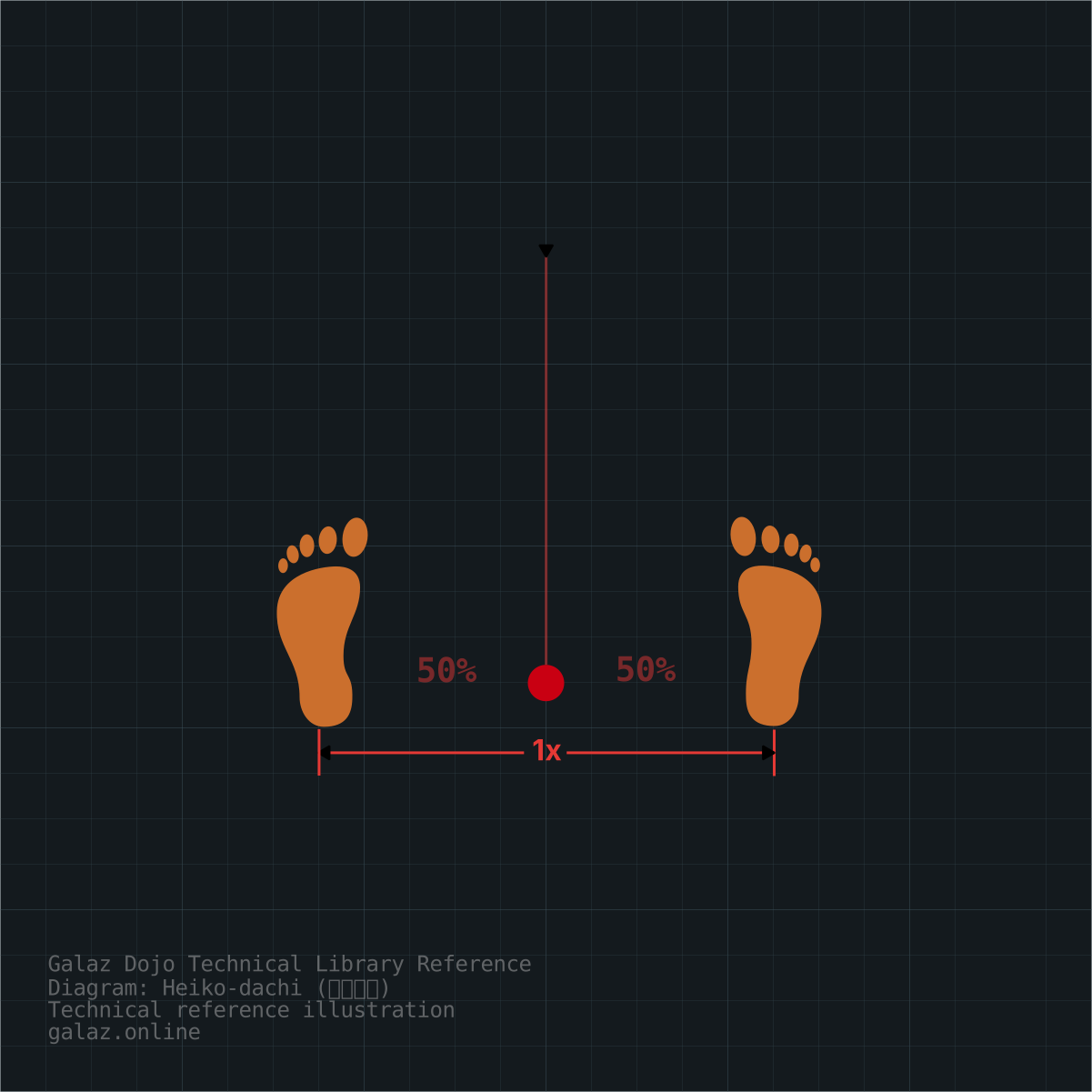
The 1× marker indicates approximate shoulder width and 50/50 expresses symmetrical weight bearing. These are pedagogical aids rather than exact measurements attributed to Oyama.
Structure and form
Feet
Place the feet about shoulder-width apart and keep them parallel, with the toes pointing forward. Do not turn them outward or inward.
Legs
Keep the legs naturally extended without rigidly locking the knees. Both legs carry the body evenly.
Hips
Keep the hips neutral and centered over the base. Do not shift, rotate, or tilt the pelvis.
Trunk and spine
Keep the trunk collected and the spine upright. The body should have clear structure without unnecessary tension.
Shoulders, arms, and hands
Keep the shoulders lowered and relaxed. Arm position depends on the exercise, kihon, kata, or yoi position and does not define the stance itself.
Gaze
Keep the head upright and the gaze forward.
Weight distribution
For teaching purposes, use 50% / 50%. The percentage expresses symmetry rather than an exact value stated by Oyama.
Center of gravity and balance
Keep the center of gravity midway between the feet on the body’s vertical line. The stance should feel neutral and stable without locking the body, allowing immediate movement into technique or another stance.
Technical purpose
Heikō-dachi develops:
- parallel foot placement
- even weight bearing
- a clear central axis
- upright posture
- awareness of lateral imbalance
- a neutral starting point for basic training
Use
Basic training
Use it to teach natural but ordered standing and to reveal unwanted foot rotation or side-to-side weight shift.
Kihon / Idō geiko
It may serve as a neutral starting position or simple base for selected techniques. In idō geiko it is mainly a reference for starting, closing, or transition.
Kata
It may appear as an opening, collecting, or transitional form.
Kumite / application
It is not a free-fighting stance, but it provides a neutral reference for posture, balance, and readiness before movement begins.
Technical key points
- feet about shoulder-width apart
- feet parallel and toes forward
- even weight on both legs
- knees following the feet
- neutral hips
- upright spine
- relaxed shoulders
- head and gaze forward
- stable without rigidity
Common errors
- turning the feet in or out
- making the base too wide or too narrow
- loading one leg more than the other
- allowing the knees to drift from the foot line
- shifting the hips
- leaning or collapsing the trunk
- raising and tensing the shoulders
Comment
Heikō-dachi is a fundamental reference stance in Kyokushin. Its simple parallel form teaches even weight bearing, upright posture, and neutral body control.