
Sotohachiji-dachi
Name: Sotohachiji-dachi (外八字立ち)
English: Outer-eight / outward eight stance
Introduction
Sotohachiji-dachi is an open, symmetrical basic stance in which the feet are separated and the toes point outward. Seen from above, the feet create an outer-eight shape.
In Kyokushin it serves mainly as a technical reference for outward foot placement, even weight distribution, and upright body bearing. It should not be turned into a deep working stance.
Definition
In Sotohachiji-dachi:
- the feet form a symmetrical open base
- the toes angle outward
- the heels are closer together than the toe line
- the body remains upright
- weight is distributed evenly
- stability is created without lowering into a deep stance
Technical figure
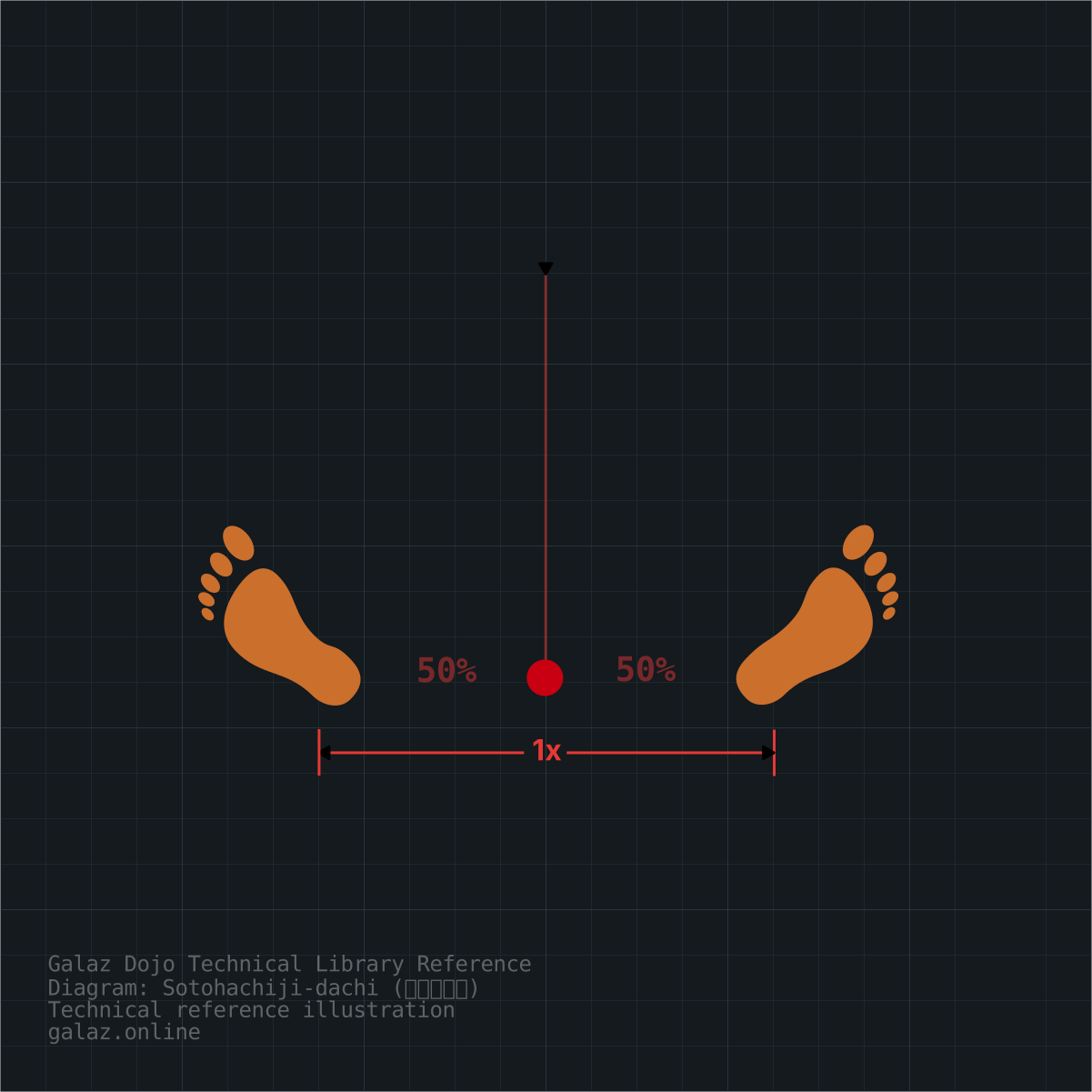
Measurements, angles, and percentages in the diagram are pedagogical markers unless explicitly identified as source measurements.
Structure and form
Feet
Place the feet apart with the toes outward and the heels closer than the toe line. Keep full, stable contact with the floor. The base should be natural rather than excessively wide.
Legs
Keep the legs straight or naturally soft. Let the knees follow the foot line and do not allow them to collapse inward.
Hips
Keep the hips neutral and centered between the feet. Do not tilt the pelvis or sink the body unnecessarily.
Trunk and spine
Keep the trunk upright and collected. Changing the foot angle must not disturb the vertical organization of the body.
Shoulders, arms, and hands
Keep the shoulders relaxed. Arm position depends on the training context and is not part of the stance definition.
Gaze
Keep the head upright and the gaze forward.
Weight distribution
Use 50% / 50% as a pedagogical expression of even weight. There is no intended forward or rearward bias.
Center of gravity and balance
Keep the center between the feet. The stance should feel centered, symmetrical, upright, relaxed, and ready for the next transition rather than heavy or locked.
Technical purpose
Sotohachiji-dachi develops:
- control of outward foot angle
- knee alignment over the feet
- even weight distribution
- neutral balance
- upright posture in an open base
- understanding of how foot angle influences the whole body
Use
Basic training
Use it to isolate and clarify outward foot placement while maintaining a neutral body.
Kihon / Idō geiko
It is normally a reference stance rather than a main working stance, useful for understanding the transition from parallel to outward foot positions.
Kata
It supports understanding of formal stance logic and transitions between parallel, inward, and outward foot structures.
Kumite / application
It is not normally used as an active kumite stance. Its practical value is the body awareness it develops: centered weight, open foot line, lateral stability, and alignment.
Technical key points
- symmetrical open base
- toes outward
- heels closer than the toe line
- even weight distribution
- knees following the feet
- neutral hips
- upright spine
- no unnecessary depth or heaviness
- relaxed shoulders
- gaze forward
Common errors
- excessive or insufficient outward angle
- making the stance too wide or too low
- letting the knees collapse inward
- loading one side
- leaning or tilting the pelvis
- unnecessary upper-body tension
- treating it as an active fighting stance
Comment
Sotohachiji-dachi is a simple but important reference form. It teaches how outward foot placement affects balance, knee line, and whole-body organization.